
The year 2025 marks 15 years of TECHO work TECHO Haiti, a country where the organization arrived to provide an immediate response to the earthquake emergency—one of the most devastating humanitarian crises in the region. What began as an emergency response has evolved into a sustained commitment in Latin America’s poorest country, adapting strategies and working alongside communities and Latin American and Haitian youth to drive change in the most vulnerable areas.
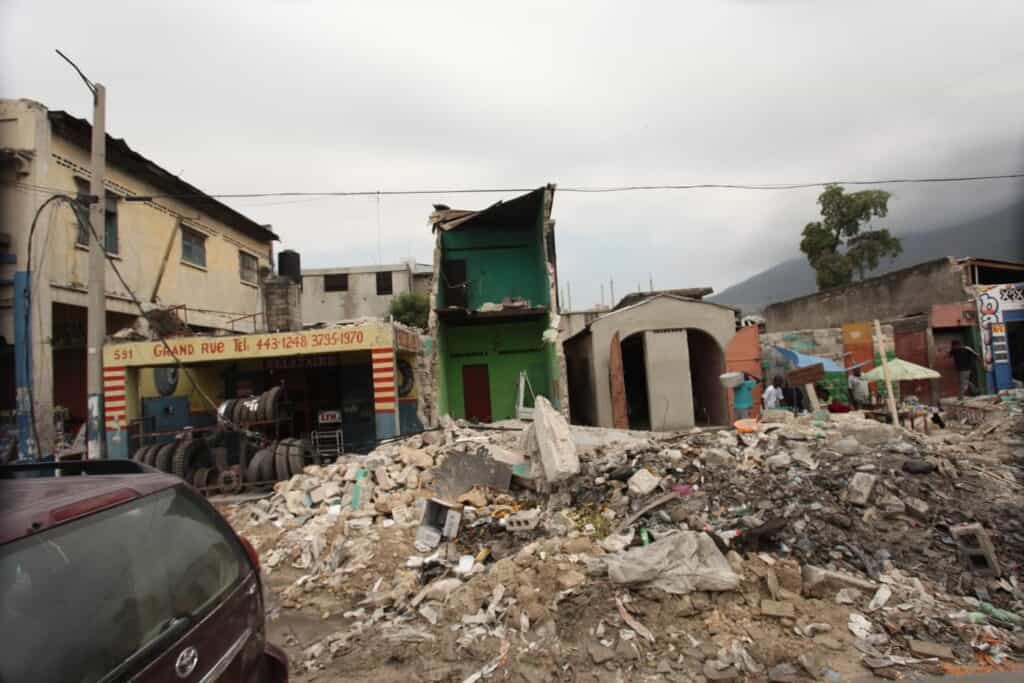
On the afternoon of January 12, 2010, a devastating earthquake struck Haiti, leaving 316,000 dead, 350,000 injured, and 1.5 million people homeless. Two weeks later, TECHO in the country with an advance team to prepare an emergency response to support the affected families.
Luis Barillas, a volunteer from El Salvador who was a college student at the time, recalls that when he heard about the earthquake, he didn’t hesitate to join TECHO first international mission TECHO Haiti. As one of the first volunteers to arrive, he found the scale of the destruction indescribable: collapsed buildings, streets littered with debris, and families with nowhere to take shelter. For him, it was a harsh reality check.
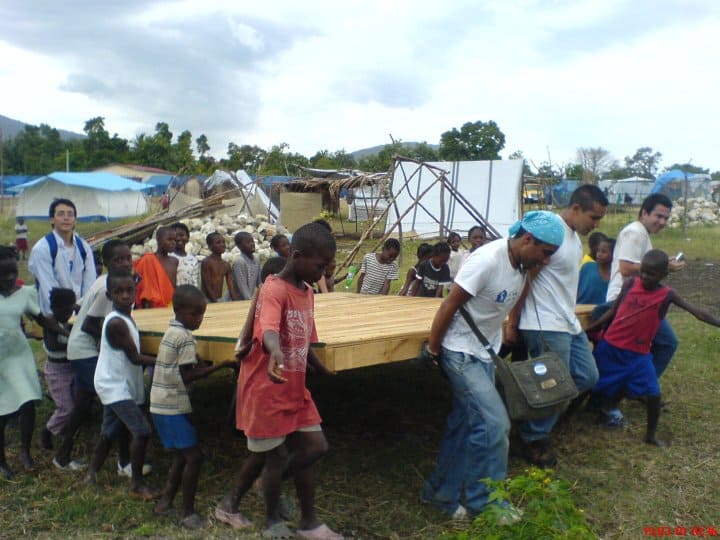
Luis says that in the face of the hardships they had to endure in the early days, “what helped a lot was our Latin spirit—through laughter and jokes, we understood each other really well.”
Originally from Chile, Sebastián Smart began his journey with TECHO 2010, newly married, and went through a challenging yet enriching experience. In those early days, there was no structure—just “people who were really eager to stay there and work.” He recalls how “that house ended up having about 20 people working day and night… a sort of reality TV house.”
There were no housing suppliers, but Sebastián says that everything changed when they found a man making desks on the street. This man, also driven by the urgency of the situation, set up a prefabricated housing factory in response to the demand for 2,000 homes in a month. He says that it wasn’t just about building homes, but also about building hope.
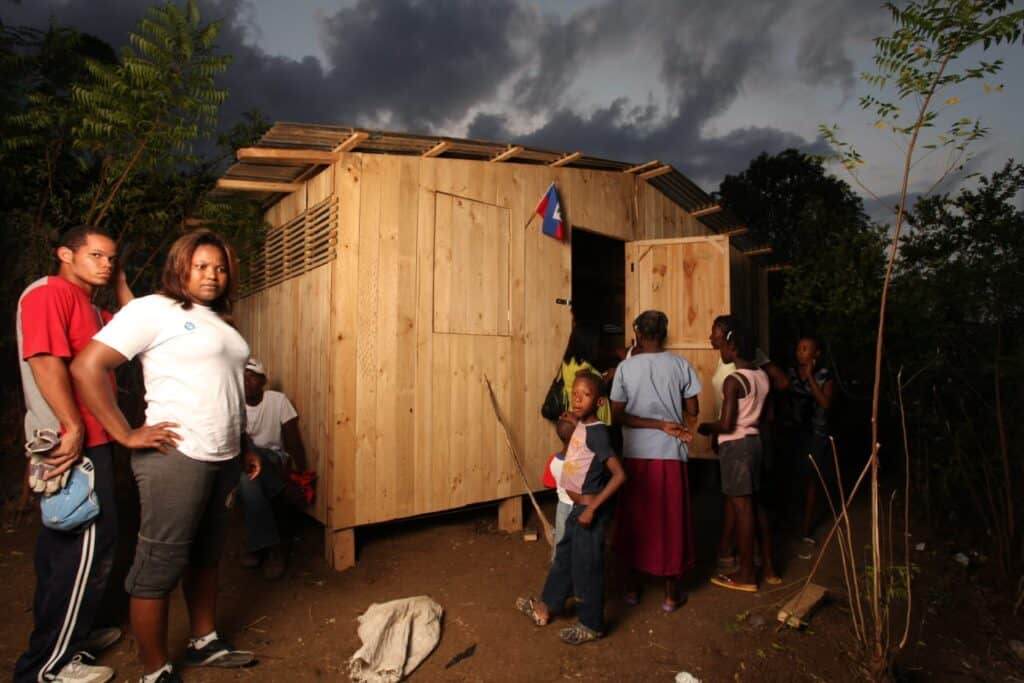
Sebastián highlights the value of the support provided by all TECHO chapters in Latin America, which helped organize the volunteer effort and coordinate the process. This effort led to the establishment of a TECHO presence TECHO Haiti, based on three pillars: necessary resources, volunteers (primarily college students), and collaboration with local communities. Thanks to this coordination, TECHO the first organization to build homes in Haiti after the earthquake, completing 500 homes and earning the community’s recognition.
2011: Scaling up the emergency response.
One year after the earthquake, TECHO hundreds of volunteers from across Latin America to take part in the largest construction project to date. During this phase, the collaboration between Haitian families and volunteers laid the groundwork for what would become TECHO sustained presence TECHO the country.
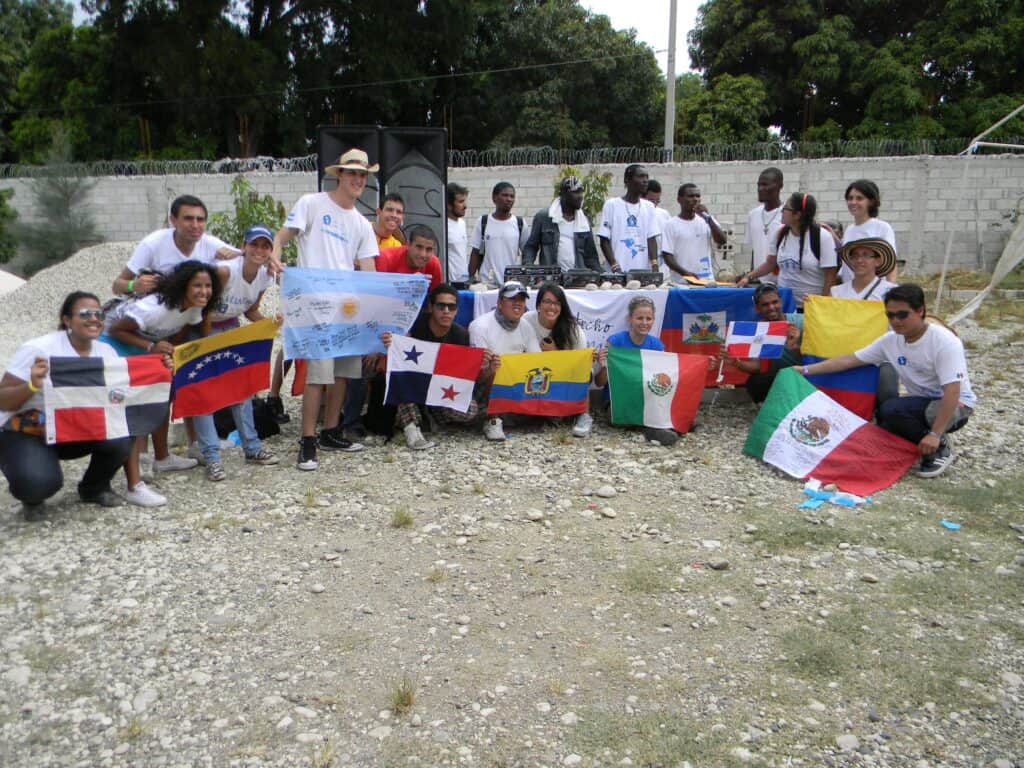
Carlos Realpe, a 19-year-old Colombian, traveled to Haiti in 2011 with TECHO. His experience was deeply moving, especially because he was able to share it with other volunteers who had been affected by the same earthquake. Despite their differences, Carlos says, “We didn’t share a common language, but the borders disappeared as we worked together—for justice, through connection, and with a hug.” That connection, forged through their shared work, transformed the lives of both the families and those who passed through there.
According to Carlos, TECHO staying true to its mission of fostering connections and providing a meaningful experience for families. He also highlighted that TECHO a key TECHO in building capacity among both volunteers and communities: “A great example of this was the volunteers in Haiti themselves—displaced people who managed to pull themselves back up.” For him, this experience demonstrated the organization’s resilience in the face of political and economic challenges and natural disasters.
2014: Organizing and Strengthening Local Volunteer Efforts.
TECHO formally TECHO its office in Haiti in 2014, building a team of volunteers made up of young Haitian college students committed to the development of their community. During this phase, the organization refocused its strategies toward more in-depth community work, thereby strengthening its impact.
2019: TECHO and the Response to the Social Context.
In response to the growing complexity of the social context in Haiti, the TECHO project was launched in 2019—an initiative that made it possible to continue providing support to vulnerable families through partnerships with local organizations.
2024: Recognition of Housing Reconstruction.
TECHO work TECHO Haiti received significant recognition at the LATAM Smart City Awards, which honored the “Housing Reconstruction in Don L’Amitié” project. This recognition highlights the dedication of volunteers, residents, and donors who have made it possible to build a more equitable Haiti.